
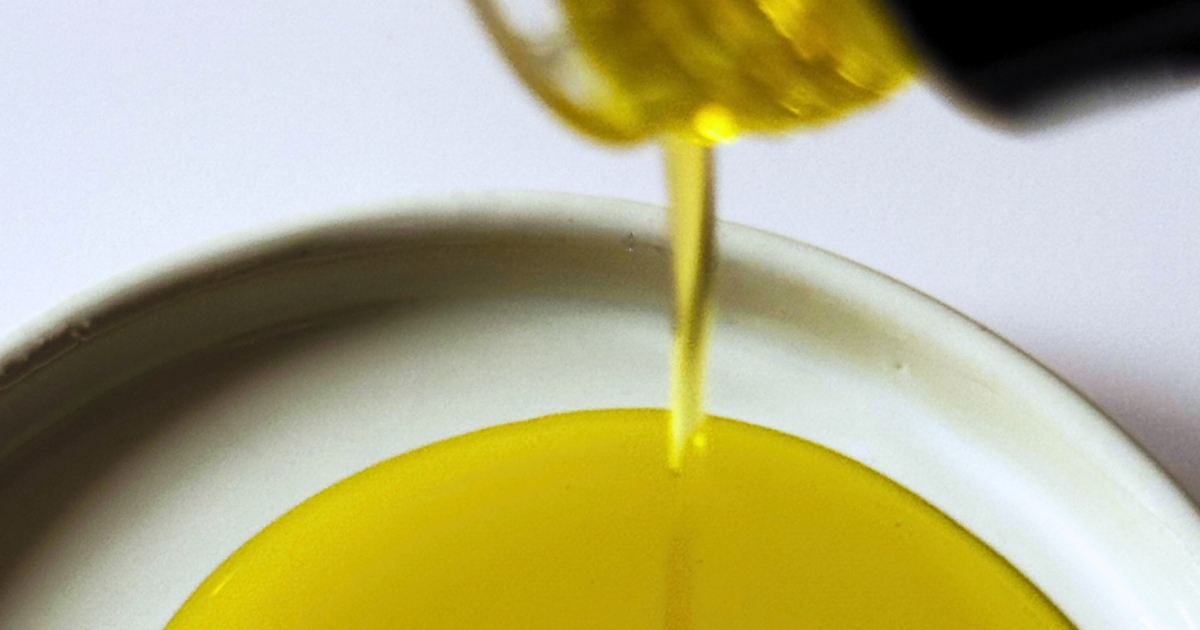
Ask the internet whether you can fry with extra virgin olive oil and you will get two answers, both delivered with great confidence.
Answer one: never. The smoke point is too low. You will ruin the oil, ruin the food, and possibly ruin your kitchen.
Answer two: of course. Mediterranean grandmothers have been frying in it for three thousand years.
Both answers are partly right, and both are missing something. Let us settle this properly.
The short answer
Yes. You can fry with extra virgin olive oil. You can shallow-fry, sauté, and even deep-fry in it. The Mediterranean has done so for generations. What matters is the quality of the oil, the temperature you cook at.
The longer answer is more interesting, because the reason the internet is so confused about this is that it is repeating a myth from the 1980s that has been quietly debunked for twenty years.
The smoke point myth
Here is the story you have probably heard: extra virgin olive oil has a smoke point of around 160–190°C, which is too low for frying. Refined oils have higher smoke points, therefore refined oils are better for cooking.
This is wrong in three ways.
First, the smoke point of a good extra virgin olive oil is not 160°C. Fresh, well-made EVOO smokes between 200°C and 215°C. The lower numbers come from old, oxidised, or poor-quality oils, and a poor-quality oil smokes early no matter what category it claims to belong to.
Second, smoke point is not the most useful measure of how an oil performs under heat. What actually matters is oxidative stability; how resistant the oil is to forming harmful compounds when heated. On that measure, extra virgin olive oil outperforms almost every other cooking oil on the market. The polyphenols and antioxidants that make a fresh EVOO taste alive are the same compounds that protect it from breaking down in the pan.
Third, most home frying happens at 160–180°C. Sautéing happens around 120–140°C. Even a shallow fry rarely pushes past 180°C. All of which sit comfortably below the real smoke point of a good EVOO.
What Hanan personally fries in Maknoon
As a certified olive oil sommelier; and someone who grew up in a Levantine kitchen, Hanan has a short list.
Halloumi, until the edges blister. Eggs, slow and lazy, so the white crisps at the edge and the yolk stays loose. Cauliflower florets with cumin, until they are almost black at the tips. Aubergine slices. Sliced potatoes with rosemary. Fresh sage leaves for thirty seconds.
So why does the myth persist?
Two reasons. First, the seed-oil industry spent decades marketing the smoke point argument, because their oils have higher numbers. Second, most people have never owned a truly fresh extra virgin olive oil; only the bottles that have been sitting in supermarket warehouses for two years before reaching them. Those oils do smoke early. That is not a frying problem. That is a freshness problem.
What to look for if you want to fry in EVOO
Three things, in order of importance.
Freshness. Look for a harvest date on the bottle, not a best-before date. A good EVOO is at its best within twelve to eighteen months of harvest. If a bottle does not tell you when the olives were picked, assume the answer is bad.
Acidity. Real extra virgin olive oil has a free fatty acid level below 0.8%. The best oils; including ours, come in under 0.3%. Lower acidity means a more stable oil under heat. We test every batch.
Polyphenol count. This is the antioxidant content. A high-polyphenol oil is more peppery in the throat, more bitter on the tongue, and significantly more stable when you cook with it. The Picual cultivar we work with is naturally high in polyphenols. That bite you feel at the back of your throat is the same thing protecting the oil in your pan.
The Levantine way
In our region, frying in olive oil is not a debate. It is the default.
The flavour of the oil is part of the flavour of the dish; that is the whole point.
If you have been keeping your good olive oil for finishing and frying in something else, you are missing half of what it can do.
Pour it in the pan. Let it get hot. Cook something.
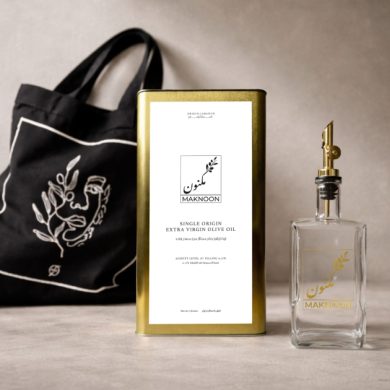
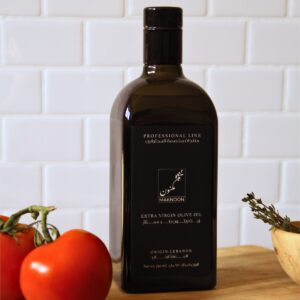
If you’re worried about running out of olive oil, then you should meet the 5L Olive Oil Tin, you’ll never run out of olive oil again.



Add comment