

Walk into any supermarket on earth and you will see the same words on every olive oil bottle: extra virgin.
The phrase sounds important. It also sounds slightly suggestive, which probably helps it sell. But what it actually means; legally, chemically, and on your tongue, is something most people have never been told.
That gap is where the global olive oil scam lives. Up to seventy percent of the bottles labelled ‘extra virgin’ on Western supermarket shelves would fail the actual extra virgin test if anyone bothered to run it. Most of the time, nobody does.
Here is what the label is supposed to mean, what it usually means, and how to tell the difference.
The legal definition
Extra virgin olive oil is a regulated category. To qualify, an oil must meet three criteria, set by the International Olive Council and adopted, with variations, by most major markets including the EU and the UAE.
First, it must be produced mechanically. The olives are crushed, pressed, and decanted using only physical methods; no chemicals, no solvents, no heat above a certain threshold. This is what ‘cold-pressed’ refers to, and it is non-negotiable.
Second, it must have a free fatty acid content below 0.8%. Free fatty acids are what you get when oil starts to break down, and a low number means a fresher, less degraded oil. The best extra virgins come in well under 0.3%.
Third, it must pass a sensory panel. Trained tasters; sommeliers, essentially, taste the oil blind and must find zero defects. No rancidity, no fustiness, no winey or muddy flavours. Any single defect, in any panellist’s notes, disqualifies the oil from the extra virgin category.
Those three things together; chemistry, processing, taste, are what ‘extra virgin’ is meant to certify.
Why most supermarket EVOOs fail
If the rules are this clear, how do so many oils get away with carrying the label without meeting it?
Three reasons.
First, enforcement is weak. The chemical tests are expensive, the sensory panels are slow, and most markets simply do not test imported oils regularly. A bottle can pass the test at production and then degrade for two years in a warehouse before reaching your shelf. By the time you buy it, the oil inside is closer to lampante grade; the category below virgin, technically unfit for human consumption, than to extra virgin. But the label has already been printed.
Second, blending. Many large brands mix oils from multiple countries, multiple harvests, and multiple grades into a single bottle. The blend may technically pass the test, but it has no identity. You cannot tell where it came from, when it was picked, or what cultivar it is.
Third, the timing problem. Olive oil is not wine. It does not improve with age. A fresh EVOO is at its peak for twelve to eighteen months after harvest. Many supermarket bottles do not even tell you when the olives were picked; only a best-before date set two or three years out. By the time you open it, the polyphenols are gone, the flavour is flat, and the only thing extra virgin about it is the word on the label.
What a real extra virgin tastes like
This is the part nobody tells you. A genuine, fresh extra virgin olive oil tastes alive.
On the nose, it smells of grass, green tomato leaf, fresh almond, or ripe apple; depending on the cultivar and the harvest. There is no fattiness in the smell. It is bright and vegetal.
On the palate, you will get a fruitiness first. Then, within a second or two, a bitterness on the middle of the tongue. Then, at the back of the throat, a peppery catch that can make you cough. That cough is not a fault. It is the polyphenols; the antioxidants, registering on the throat receptors. The more aggressive the cough, the higher the polyphenol count, the healthier and more stable the oil.
A flat, soft, buttery oil with no bitterness and no pepper is not extra virgin in any meaningful sense. It is olive oil-shaped product.
How to tell the difference at the shop
Five things to look for. In order of importance.
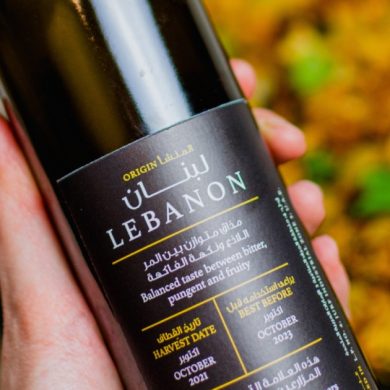
- Harvest date. Not best-before, harvest date. If the bottle does not tell you when the olives were picked, assume the brand has something to hide. We print the harvest year on every Maknoon bottle.
- Single origin or single cultivar. A bottle that names a country, a region, or even better a specific cultivar is one you can trust. A bottle that says ‘product of Italy’ when the label fine print admits ‘packed in Italy with oils from Spain, Greece, and Tunisia’ is one you cannot.
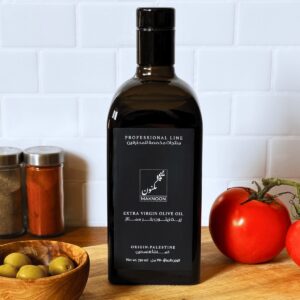
- Dark glass or tin. Light degrades olive oil within weeks. A bottle in clear glass on a sunlit shelf is already compromised, regardless of what the label says.
- Acidity, if listed. Look for less than 0.3%. Anything above 0.5% is technically extra virgin but well past its prime.
- Price. Extra virgin olive oil cannot be produced honestly for under a certain cost. If a litre of EVOO is cheaper than a bottle of mid-range wine, something has been cut.
Why we do it this way
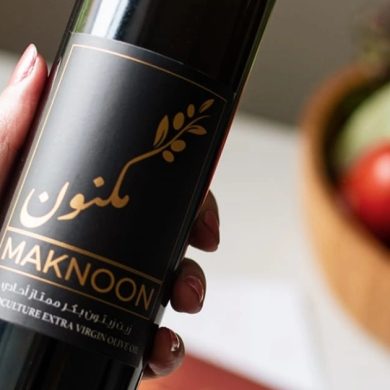
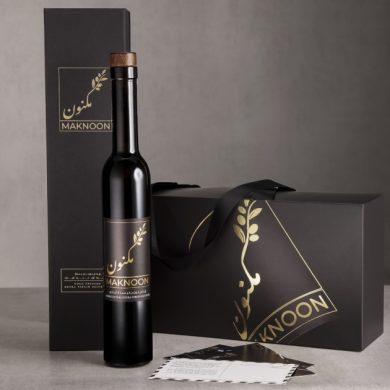
Maknoon was built around the gap between what ‘extra virgin’ is supposed to mean and what it usually means in practice.
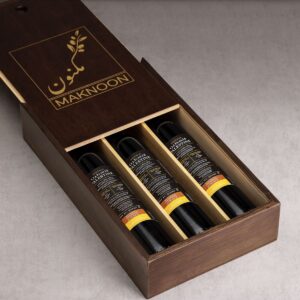
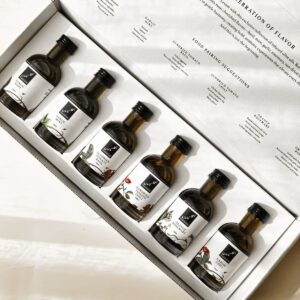
Our oils are single-origin, single-cultivar, harvest-dated, and tested for acidity and polyphenols on every batch. They come in dark glass or tin. They tell you exactly which farmer pressed them and when.
That is not a marketing position. It is what the original definition of extra virgin was always supposed to guarantee. We just decided to actually do it.
Next time you reach for a bottle, read the label slowly. If it does not tell you when the olives were picked, put it back.
You deserve to know what is in your kitchen.


Add comment